How to Use a Pressure Washer: Step-by-Step Guide for Beginners
Quick answer: To use a pressure washer, connect the garden hose and turn the water on first, attach a wide nozzle, squeeze the trigger to purge air, then start the machine. Clean in overlapping strokes from top to bottom, keep the wand moving, and never point it at people or pets. Last updated: October 2026.
A pressure washer is simple to run, but small choices decide whether you clean a patio in an hour or strip the paint off a fence. This guide covers setup, nozzles, soap and safety for electric and gas models. It draws on published guidance from Family Handyman and Greenworks. Always read your own manual, because connectors and start-up steps vary by brand.
What do you need before you start?
- A water supply that keeps up. Family Handyman suggests filling a 5-gallon bucket from your hose: under 2 minutes is enough.
- Nozzles suited to the job, and pressure-washer-safe detergent if you plan to use soap.
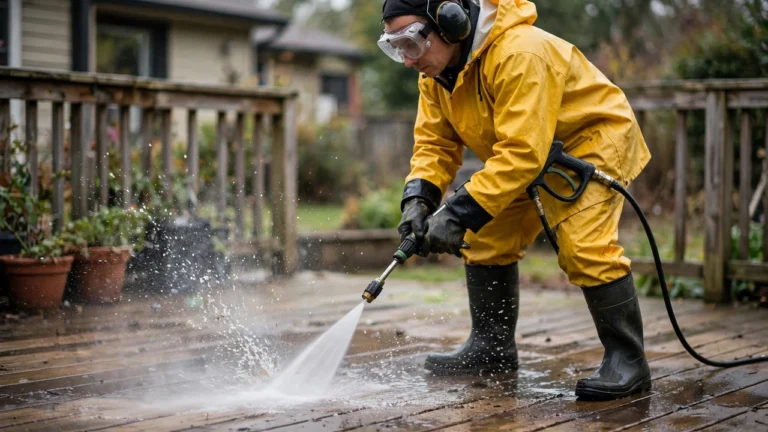
- Safety glasses, closed-toe shoes and long pants.
- For electric models, an outdoor-rated extension cord and a GFCI outlet.
How do you use a pressure washer, step by step?
Step 1: Connect the water and hoses
Attach the high-pressure hose to the machine and the wand, then connect a garden hose to the water inlet. Tighten by hand and check for leaks.
Step 2: Turn the water on first
Open the faucet before you power the machine. Greenworks notes that forgetting this is a common mistake, because running the pump without water can damage it.
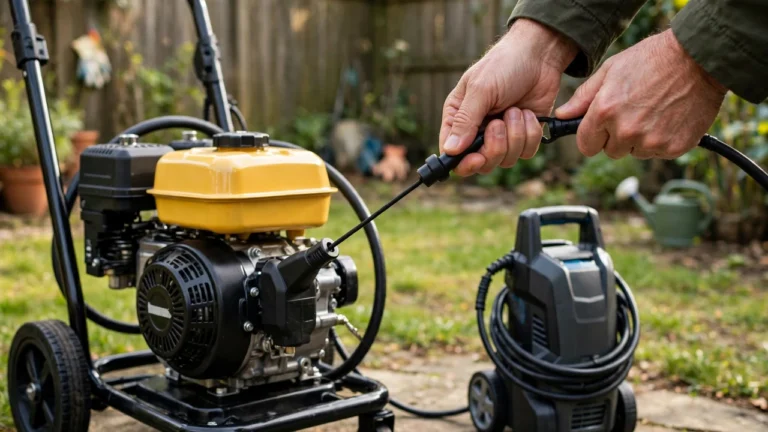
Step 3: Attach a nozzle
Pull back the collar, insert the tip and release it. Start with a wide angle, and move to a narrower tip only if the dirt will not budge.
Step 4: Purge the air and start
Squeeze the trigger with the machine off until water flows steadily. Then press the power button on an electric model, or prime the engine and pull the cord on a gas model.
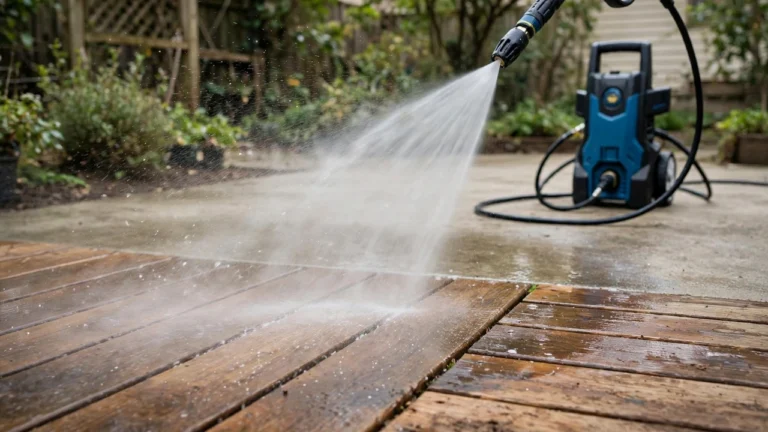
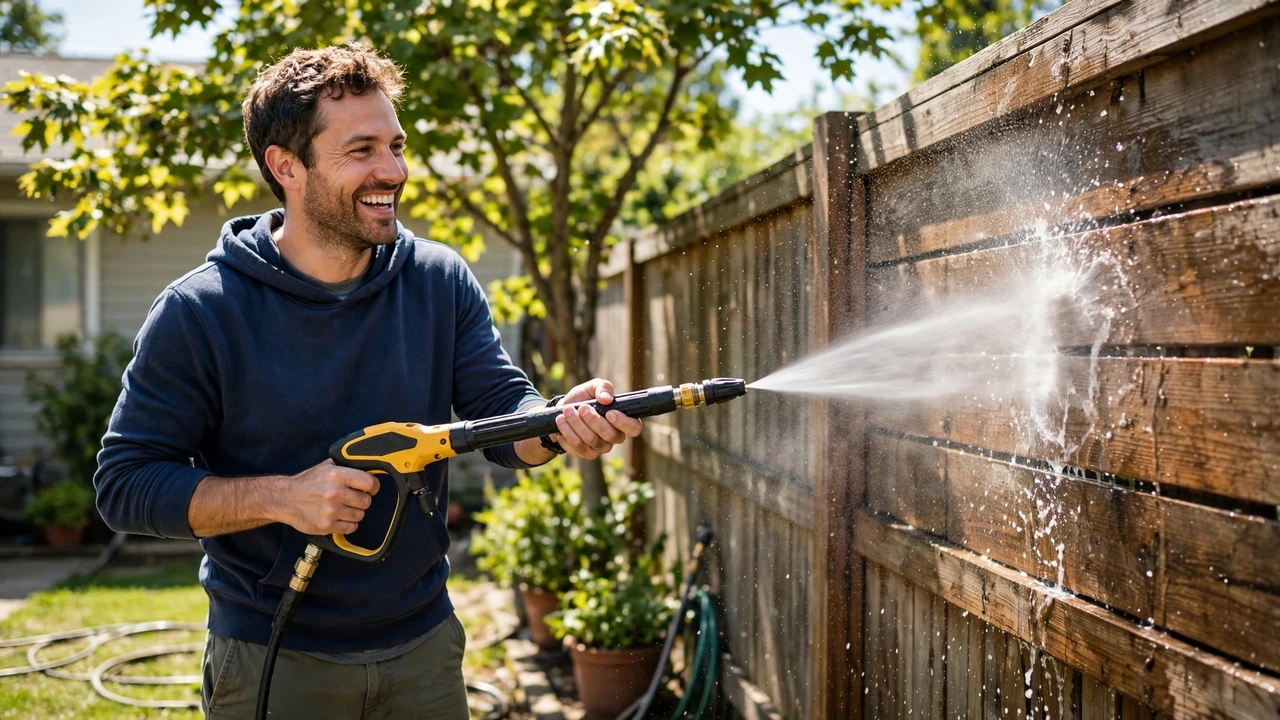
Step 5: Clean in overlapping strokes
Work from top to bottom in long, overlapping passes at a slight angle, so dirt is pushed away instead of into the surface. Distance advice differs by source: Family Handyman suggests starting about 2 feet back, while Greenworks cites about 4 inches for tough grime on hard surfaces. Start farther away and move closer only as needed.
Step 6: Shut down safely
Release the trigger and engage the safety lock, turn off the water, squeeze the trigger to release pressure, then disconnect the hoses. Store the machine somewhere dry, and protect the pump from freezing.
Which nozzle should you use?
Nozzles are color coded by spray angle, but colors differ by brand. Family Handyman lists green as 25 degrees and white as 40 degrees, while Greenworks lists orange as 25 degrees and green as 40. Always read the angle stamped on the tip.
| Angle | Typical use |
|---|---|
| 0 degrees | Concentrated blasting on tough stains. Easy to damage surfaces. |
| 15 degrees | Heavy cleaning on hard surfaces |
| 25 degrees | General-purpose cleaning |
| 40 degrees | Wide, gentle rinsing, cars and delicate surfaces |
| 65 degrees | Low-pressure soap application |
How do you use soap with a pressure washer?
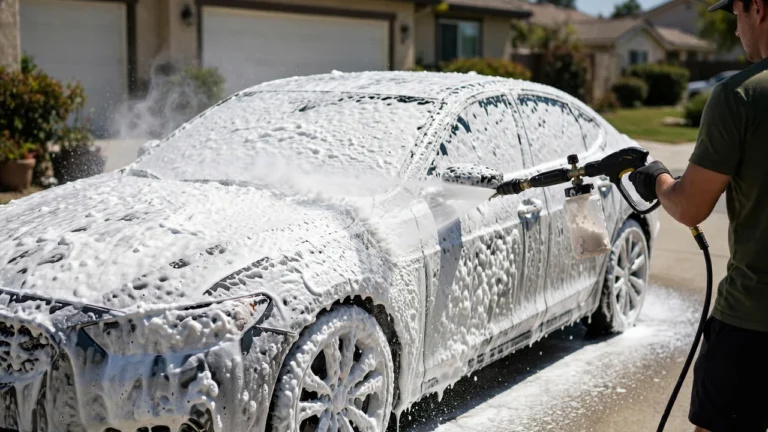
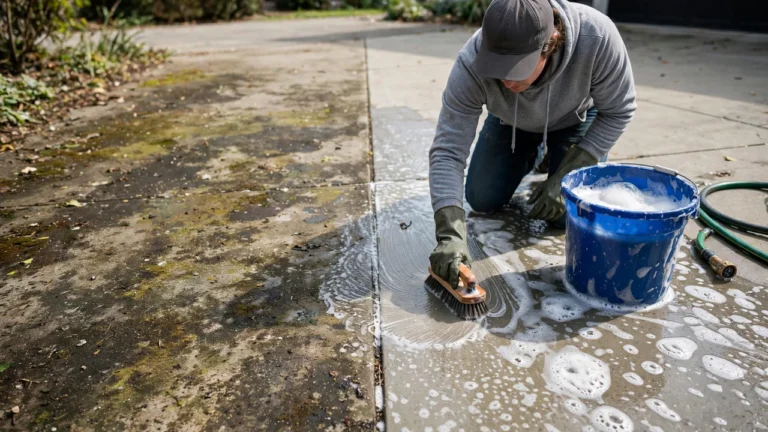
Use only detergent made for pressure washers. Apply it at low pressure through the soap tank or a foam cannon, and keep the surface wet so it does not dry and streak. Let it work briefly, then rinse with plain water. Bleach and household cleaners can damage the pump and seals.
Which surfaces need extra care?
- Cars: Use a 40-degree tip about 12 inches away. See our best pressure washers for cars.
- Wood decks and fences: Use a wide tip and work with the grain.
- Siding: Spray downward and avoid forcing water behind the boards.
- Windows and lights: Avoid high pressure, which can break glass or seals.
- Composite decking: Greenworks advises against pressure washing it.
- Old paint: Homes built before 1977 may have lead paint. Do not blast it off without precautions.
What safety rules should you follow?
- Never point the wand at people, pets or your own feet. The stream can cut skin.
- Wear safety glasses, boots and gloves.
- Do not pressure wash from a ladder. Recoil can throw you off balance.
- Stay well away from power lines and electrical equipment.
- Release pressure before you change nozzles or disconnect hoses.
What mistakes should you avoid?
- Starting the machine before the water is on.
- Beginning with a narrow nozzle or holding the wand too close.
- Spraying straight on instead of at an angle.
- Skipping a test on a hidden spot.
- Putting household cleaners in the detergent tank.
Frequently asked questions
What kind of soap should I use in a pressure washer?
Use a detergent labeled for pressure washers, such as car soap for vehicles or deck cleaner for wood. Never use bleach or household cleaners in the machine.
What PSI do I need?
Routine home cleaning usually needs 1,500 to 2,000 PSI. Driveways and concrete go faster at 2,500 to 3,000 PSI.
Can I run hot water through a pressure washer?
Only if the machine is rated for hot water. Most home washers are cold-water only, and hot water can damage the pump and seals.
What oil does a gas pressure washer use?
Check the manual. The engine and the pump can need different oils, and the right grade depends on the model.
Why will my pressure washer not start?
Check that the water is on, the hose is not kinked, air is purged, the outlet has power or the tank has fuel, and the trigger lock is off.
Final thoughts
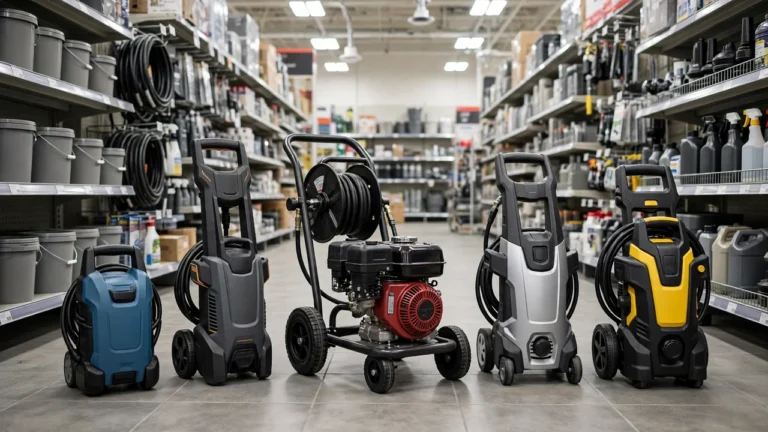
Good pressure washing is mostly about slowing down. Pick a wide nozzle, test a small spot, keep the wand moving and finish with a clean rinse. See our best electric pressure washers if you are still choosing a machine.
Sources: Family Handyman and Greenworks. Follow the manual for your model.