How to Start a Pressure Washer: Gas and Electric Step-by-Step
Quick answer: For a gas washer: connect and turn on the water, squeeze the trigger for 5 to 10 seconds to purge air, turn the fuel valve on, close the choke for a cold start, then pull the cord. Never run the pump without water, since Family Handyman says it can be destroyed within seconds.
Last updated: October 2026. A pressure washer that will not start is usually a fuel, choke or water problem. This guide uses Novus Power Equipment, Family Handyman, Generac Support and Bob Vila. Always read your own manual first, because controls vary by model.
How do you start a gas pressure washer?
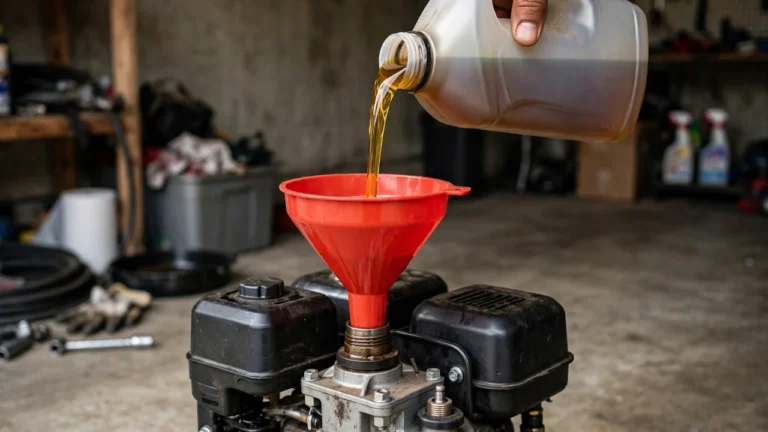
Novus Power Equipment’s checks before starting are fuel of 87 octane or higher, engine oil at the right level and water connected and turned on. Then follow five steps.
- Prime the water system: turn the tap on and squeeze the trigger for 5 to 10 seconds until water flows without bubbles.
- Turn the fuel valve on.
- Close the choke for a cold start. For a warm restart, leave it open.
- Pull the rope gently to resistance, then pull firmly. If it fails after 4 to 5 pulls, recheck the choke.
- Once running, ease the choke to the run position gradually.
How do you shut it down safely?
Novus says to release the trigger, let the engine idle for 15 to 30 seconds, switch it off, close the fuel valve, squeeze the trigger to depressurize and then turn off the water.
How do you start an electric pressure washer?
Connect the water and purge air by squeezing the trigger, plug into a GFCI outlet and switch on. If it will not run, Bob Vila says to try other outlets, check for a tripped breaker and confirm the circuit has enough amperage. Home Depot gives no additional startup steps for electrics beyond reading the manual.
What are the common reasons a gas washer will not start?
| Cause | Fix | Source |
|---|---|---|
| Stale fuel (over 6 months) | Drain, flush with carburetor cleaner, refill and add stabiliser | Family Handyman |
| Dirty carburetor | Clean or rebuild ($25 to $100), or replace ($30 to $200) | Family Handyman |
| Fouled spark plug | Replace | Family Handyman, Generac |
| Choke left on | Move to the correct position | Generac |
| Dirty air filter | Clean or replace | Generac |
| Bad ignition coil or flywheel key | Repair | Family Handyman |
Why must the pump have water?
Family Handyman warns never to run the pump without water because it can destroy it within seconds. Always connect the hose and open the tap before starting.
How do you release trapped pressure?
Pull the trigger with the gun pointed away from people and pets. Family Handyman recommends this when the trigger will not squeeze or the hose is stuck under pressure.
What should you check before every start?
- Fuel level and freshness.
- Oil level.
- Hose and gun connections.
- Spark plug wire.
- Clear area, with people and pets away.
What if the engine starts but there is no pressure?
Check the inlet filter, the water supply and the nozzle for blockages, and purge air by squeezing the trigger. If pressure stays low, the pump or unloader may need service. Our how-to guide explains normal operation.
How can you make starting easier?
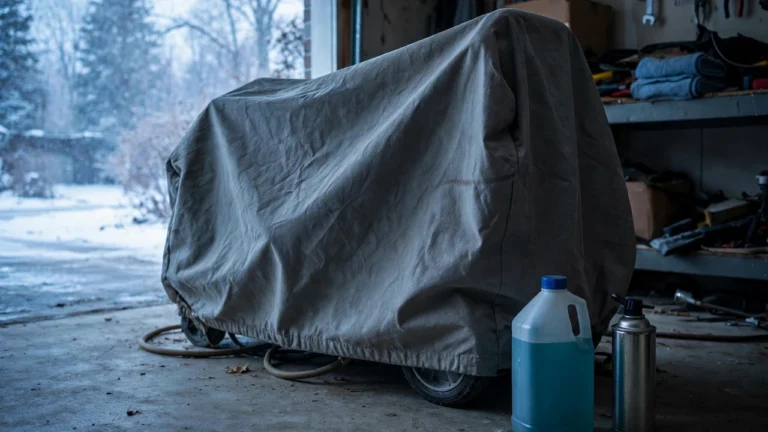
Use fresh fuel, keep the air filter clean and follow our winterizing guide before storage. If you dislike pull cords, DeWalt’s battery-assisted starting is one option, described in our DeWalt review.
Gas versus electric: which is easier to start?
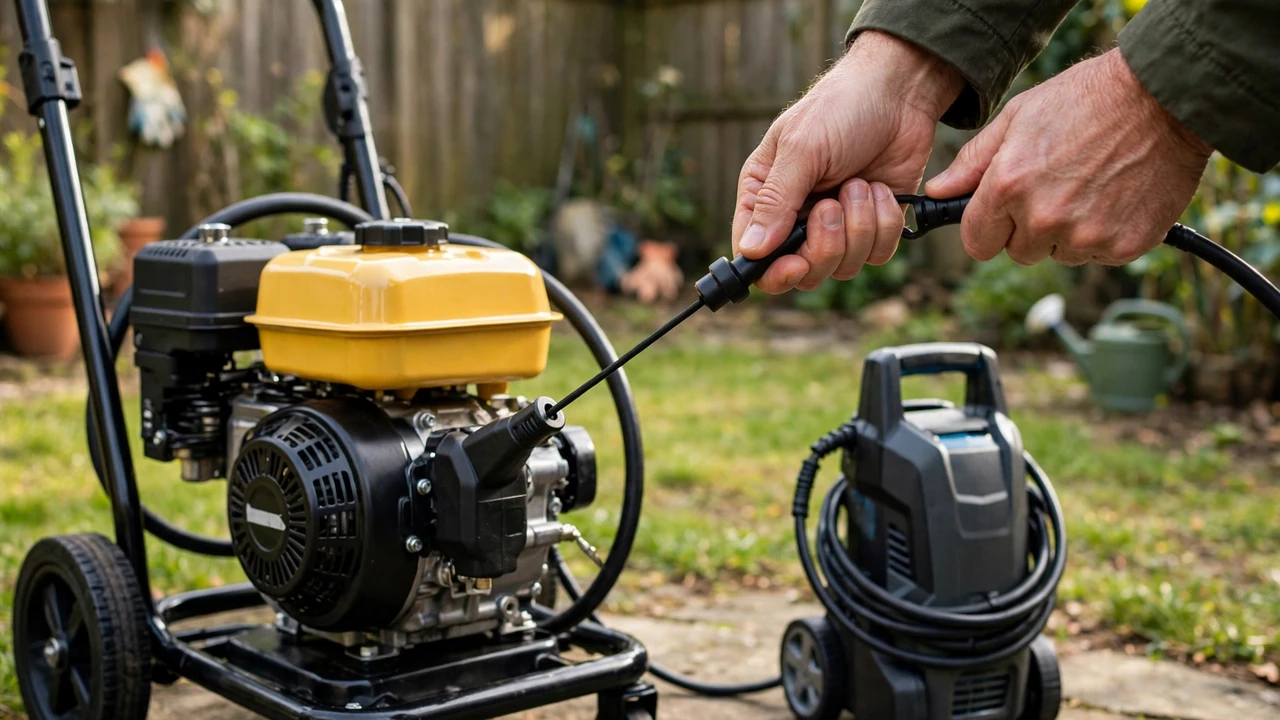
Electric machines are simpler because there is no fuel, choke or pull cord: connect water, purge air, plug in and switch on. Gas machines give more power but need more care, especially after storage. If you use a machine only a few times a year, fresh fuel and a clean spark plug do more for reliable starting than anything else.
What safety points apply at start-up?
Point the gun at a safe surface, never at people, pets or plants. Wear eye protection and closed shoes, and run gas units outdoors only because of carbon monoxide. Keep the trigger lock on until you are ready to spray, and stand with your feet apart to handle the recoil. Our safety guide covers protective gear in detail.
When should you call a professional?
If the engine still will not start after you have checked fuel, choke, filter and plug, the carburetor or ignition may need service. Family Handyman lists carburetor rebuilds at $25 to $100 and replacements at $30 to $200 in parts, but labour is extra. Compare that with the machine’s value before you decide to repair.
Frequently asked questions
Why won’t my pressure washer start?
Common causes are stale fuel, a dirty carburetor, a fouled spark plug or a choke left in the wrong position.
How many pulls should it take?
Novus says to recheck the choke if it fails after 4 to 5 pulls.
Can I run it without water?
No. Family Handyman says the pump can be destroyed within seconds.
Why won’t my electric washer run?
Bob Vila suggests trying other outlets and checking the breaker.
Final verdict
Water first, then fuel and choke, then pull. If it still will not start, check fuel age and the spark plug before calling a repair shop.
Sources: Novus Power Equipment, how to start a gas pressure washer; Family Handyman, pressure washer won’t start; Generac Support; Bob Vila. Related: How to winterize, What oil to use, Pressure washer safety.