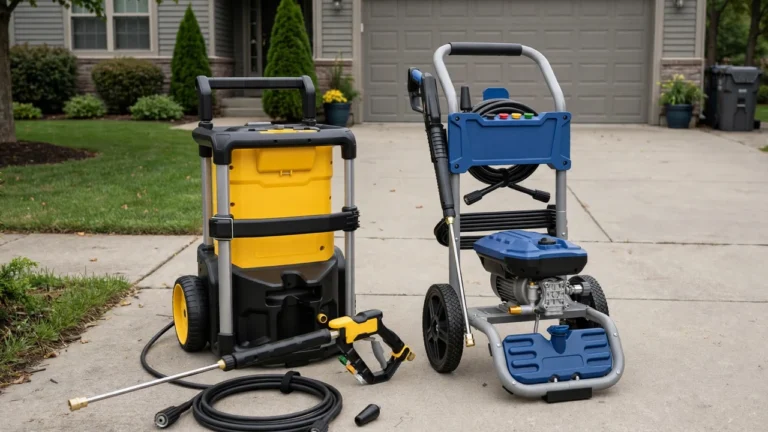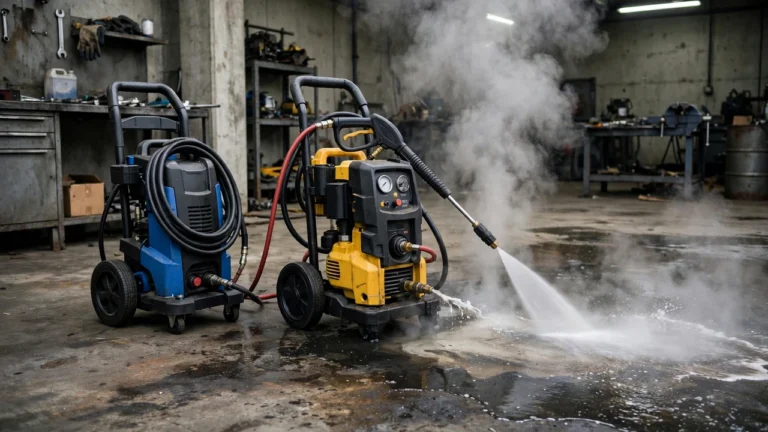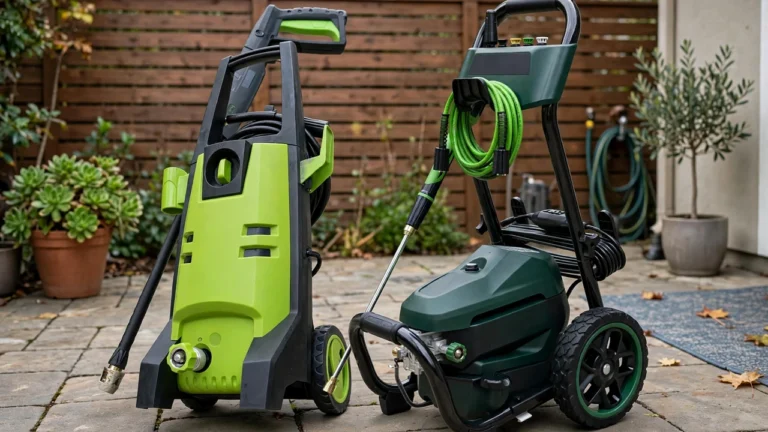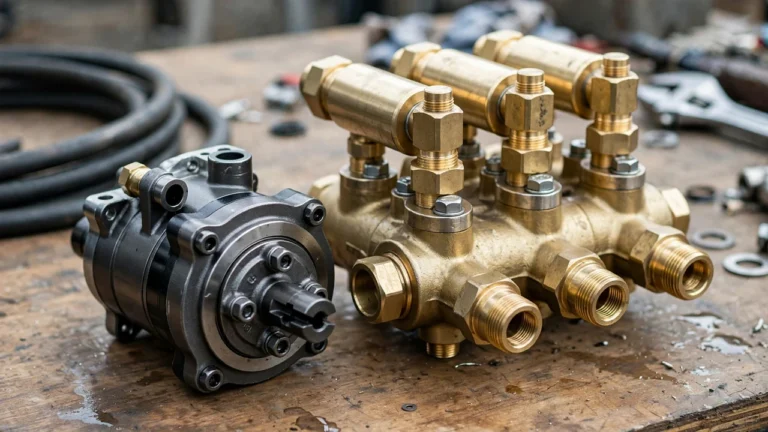
Electric vs Gas Pressure Washer: Which Should You Buy?
Quick answer: Choose an electric pressure washer for cars, patios, fences, decks and general home cleaning: it costs less, weighs less, runs quieter and needs little upkeep. Choose gas for large driveways, heavy build-up, frequent use or work far from an outlet. Last updated: October 2026.
The choice comes down to how tough your jobs are. This guide compares the two using published figures from Lowe’s and Greenworks. Ranges vary by brand and retailer, so treat the numbers as a guide, not a promise.
Electric vs gas pressure washer at a glance
| Factor | Electric | Gas |
|---|---|---|
| Typical pressure | About 1,200 to 3,100+ PSI, varies by source | About 2,000 to 4,200+ PSI |
| Price | Roughly $100 to $400 | Roughly $300 to $600 |
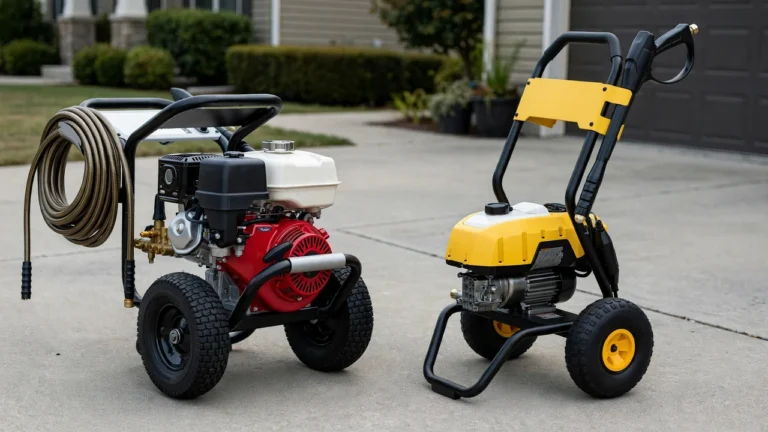
| Weight | Lighter and more compact | Heavier and bulkier |
| Noise and fumes | Quieter, no exhaust | Loud, with exhaust |
| Maintenance | Minimal | Oil, spark plug, filters and fuel care |
| Runtime | Unlimited if corded, limited on battery | As long as you have fuel |
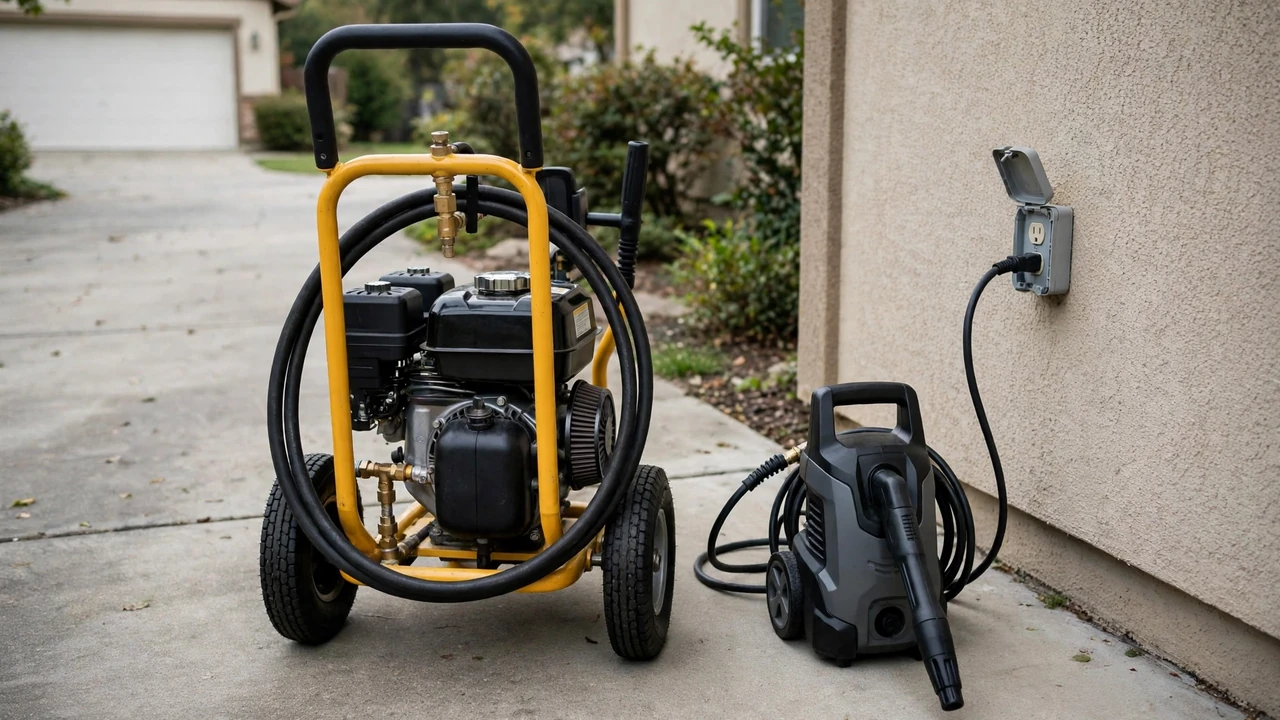
| Where you can use it | Near an outlet or on battery | Anywhere |
| Best for | Cars, patios, decks, fences | Large driveways, tough stains, frequent use |
Price ranges are from Greenworks. Pressure ranges differ between Lowe’s and Greenworks, so we show the spread.
Which is more powerful?
Gas machines reach higher PSI and often higher flow, so they finish large or dirty surfaces faster. Electric models have closed much of the gap: the best now reach 3,000 PSI or more, which is plenty for a house, deck and driveway. Compare cleaning units (PSI multiplied by GPM) rather than PSI alone. Our best electric pressure washers guide lists the numbers for six models.
Which costs less?
Electric washers are cheaper to buy and to run. There is no fuel to buy and there are fewer parts to replace. Gas machines cost more up front, and they are easier to justify if you use them often because they tend to last longer with proper maintenance.
Which needs more maintenance?
An electric washer needs basic care: clean the filter, drain the water, store it out of the cold and keep the cord in good shape. A gas washer needs what any small engine needs, including oil changes, spark plugs, air and fuel filters, and fresh fuel. Skip that and it may not start when you need it.
Which is quieter and more portable?
Electric is quieter, has no exhaust, and is lighter to carry. You do need an outlet, or a battery model with limited runtime. Gas works anywhere but weighs more and is louder. Never run a gas engine indoors or in a closed garage because of the exhaust.
How long do they last?
Lowe’s notes that gas washers can last many years with regular maintenance, while electric models range from a couple of years to around a decade. Brand, use and winter storage matter as much as the power source.
Which should you choose?
Choose electric if you:
- Mainly clean cars, furniture, patios, fences or small decks.
- Want a lighter, quieter machine with little maintenance.
- Have an outlet or hose reel close to the work area.
- Are on a budget.
Choose gas if you:
- Clean large driveways, long fences or concrete often.
- Deal with stubborn stains, old paint or heavy build-up.
- Need to work far from any outlet.
- Are happy to maintain a small engine.
Pressure washer vs power washer: is there a difference?
Yes. Both use high-pressure water, but a power washer also heats the water, which helps cut grease and oil. Most home machines are cold-water pressure washers. Hot-water machines cost more and are usually built for professional work.
Frequently asked questions
Is a gas pressure washer better than an electric one?
It is more powerful, but not always better. For most home jobs an electric machine is enough and easier to live with.
Is electric strong enough for a driveway?
Yes, especially a 2,500 to 3,000 PSI model with a surface cleaner. Big or heavily stained driveways take longer than with a strong gas machine.
Which is safer for cars?
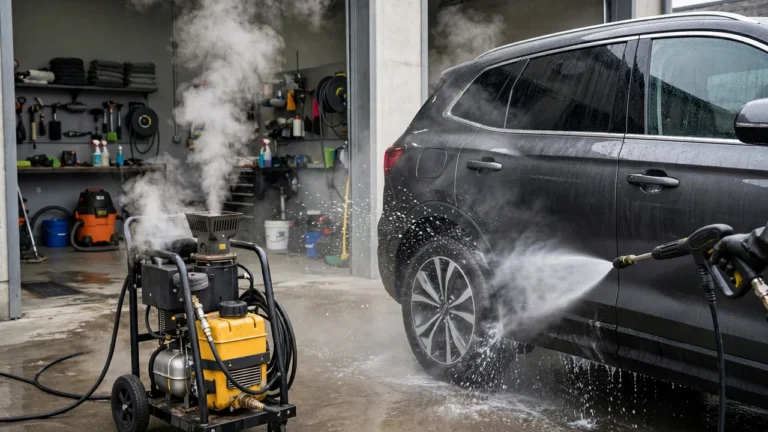
Electric. Its lower pressure range is easier to keep within a paint-safe zone, and it makes no exhaust.
Do gas pressure washers need more maintenance?
Yes. Plan on regular oil changes, spark plug and air filter checks, and fresh fuel.
What is the difference between a power washer and a pressure washer?
Both use high-pressure water. A power washer also heats the water, which helps with grease. Most home machines are cold-water pressure washers.
Final verdict
If you are unsure, buy electric. It covers most homeowner jobs at lower cost and with less hassle. If you already know you will tackle big, dirty or regular jobs, a gas machine is worth the extra weight and upkeep.
Sources: Lowe’s and Greenworks. Prices and specs change, so confirm with the seller. Related: best pressure washers for cars, how to use a pressure washer.